

Harnessing the Potential
of Cord Blood and
Cord Stem Cells Banking
Today’s research indicates that Cord Blood and Cord Tissue Stem Cells work differently to heal the body. Banking both Cord Blood and Cord Tissue Stem Cells can comprehensively protect your child and family’s health.

With scientific research pushing the boundaries and driving the discovery of medical applications, it will only be a matter of time before the immense therapeutic potential of stem cells is realised.
Understanding the umbilical cord blood stem cells advantages will help in making an informed decision about preservation.
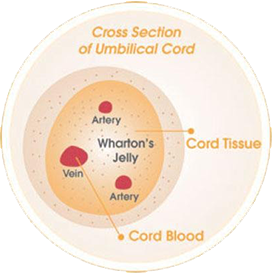
What is Cord Tissue Banking?
Cord tissue refers to the actual umbilical cord and contains a rich source of
Mesenchymal Stem Cells (MSCs). These stem cells have the potential to develop into a wide range of cells and tissues, such as bone, heart, nerve, muscle cornea, fat and cartilage tissues.
At StemCord, we culture these MSCs from the umbilical cord tissue and store them as Cord Stem Cells.
What Can Cord Stem Cells Do?
Cord stem cells are found in both cord blood and cord tissue and are collected at birth.


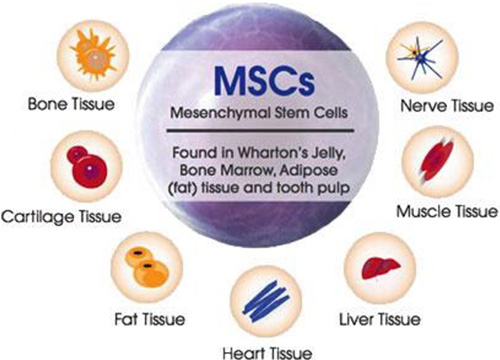
The use of Cord Tissue Stem Cells for treatments are still in the clinical trial phase, but they have great potential for future use in the treatment of conditions such as heart disease, diabetes, strokes, spinal cord injuries, and more..
Research indicates that these cord stem cells, mainly Mesenchymal stem cells (MSCs) found in the Wharton’s Jelly of the umbilical cord have the unique ability to rapidly regenerate and differentiate themselves into various tissues and organ cells, including heart, nerve, cartilage, bone, muscle, liver, cartilage and fat tissue.



Currently, there are more than 1,000 ongoing clinical trials1 involving MSCs, and more than 6,000 articles are published, which further emphasise the potential for MSCs in future Stem Cell therapies.
How are Cord Stem Cells different from Cord Blood Stem Cells?
Stem cells from the umbilical cord contains an abundance source of multipotent stem cells:

Cord Blood Stem Cells
Haematopoietic Stem Cells (HSCs)
- Regenerate organ tissues, the blood and immune system
- Differentiate into blood components such as red blood cells, white blood cells and platelets

Cord Stem Cells
Mesenchymal Stem Cells (MSCs)
- Regenerate structural and connective tissues
- Differentiate into bone, cartilage, fat, heart, liver, muscle and nerve tissues and have immunomodulatory functions that can “correct” an abnormal response.
Treatment Potential for Cord Stem Cells
Research in Cord Stem Cells is proceeding at a rapid pace, with an increasing number of clinical trials conducted worldwide2. Researchers believe that Cord Stem Cells may help to treat various conditions such as:
| Name of Disease/Disorder | Cord Tissue Allogeneic |
Neurological Disorder
| Alzheimer’s Disease |
 |
| Autism |
|
| Cerebral Palsy |
|
| Parkinson’s Disease |
|
| Spinal Cord Injury |
|
| Stroke |
|
| Traumatic Brain Injury |
|
Auto-Immune Disorder
| Amyotrophic Lateral Sclerosis (ALS) |
|
| Graft-versus-Host Disease (GvHD) |
|
| Lupus |
|
| Multiple Sclerosis |
|
| Rheumatoid Arthritis |
|
Cardiovascular
| Acute Myocardial Infarction (Heart Attack) |
|
| Heart Failure |
|
Diabetic
| Diabetes, Type 2 |
|
Genetic and / or Metabolic Disorders
| Metabolic Syndrome |
|
| Spinal Muscular Atrophy |
|
Others
| Kidney Failure |
|
| Liver Cirrhosis |
|
| Liver Failure |
|
| Wounds |
|
The full list of diseases can be obtained from https://parentsguidecordblood.org/en/diseases
Advantages of Umbilical Cord Blood Stem Cells
The advantages of umbilical cord blood stem cells are extensive, making them an invaluable resource for medical treatments. Here are some key benefits6:
- Rich in Stem Cells: Cord blood contains a high concentration of hematopoietic stem cells (HSCs), essential for blood and immune system regeneration;
- Lower Risk of Graft-Versus-Host Disease (GVHD): These stem cells are less likely to be rejected in transplants;
- Non-Invasive Collection: The process is painless and risk-free for both mother and baby;
- Immediate Availability: Preserved stem cells can be used whenever needed, reducing waiting times for compatible donors;
- Potential for Future Therapies: Research is exploring the use of cord blood stem cells in treating conditions such as cerebral palsy, diabetes, and heart disease.
Going the Extra Mile for Your Future
StemCord takes an extra step in culturing stem cells prior to storage to ensure the harvest of quality stem cells, as research has shown that cells extracted from thawed frozen cord tissues exhibited poorer cell recoveries, decreased efficiency, and slower growth characteristics3.
Here’s why it matters..
While many Cord Blood Banks choose to store the umbilical cord as a whole or in segments, research has shown that culturing the stem cells before storage increases cell yield 8x more4 than the cells yielded from segmented frozen tissues.

Introducing StemCord CultureFIRST:
Increasing Stem Cell Yield
Increasing Stem Cell Yield

StemCord CultureFIRST Advantages

Higher Cell Count
Research has shown that culturing first from a fresh cord before storage, gives 8x5 more cells yield.

Readily Available for Treatment
With StemCord’s CultureFIRST process, you can be assured your Cord Stem Cells are readily available as soon as they are needed. This differs from other banks that choose to store whole or chopped Cord Tissues without extracting the Stem Cells prior to storage.

Further Possibilities For Your Futures
These Cord Stem Cells can be further multiplied with a culturing process if the therapy (for certain conditions) requires larger doses of cord stem cells.
Frequently Asked Questions
Cord blood contains hematopoietic stem cells (HSCs) that are effective for treating blood-related diseases, while cord tissue contains mesenchymal stem cells (MSCs) that are useful for regenerative medicine and tissue repair.
When stored under optimal cryogenic conditions, cord blood and cord tissue stem cells can remain viable for decades.
No, the collection process is completely safe and does not interfere with childbirth.
Yes, stored cord blood has a higher chance of matching siblings or close relatives, making it a valuable family resource.
Stem cell banking provides families with a secure way to preserve their baby’s stem cells for potential future use. Whether considering cord blood banking, cord tissue banking, or both, storage options ensure access to these valuable cells if needed.
Learn More About Cord Blood & Cord Stem Cells Banking
Reference Links
Source: Briddell R, Litkenhaus F, Foertsch G, Fuhrmann A, Foster K, Falcon Girard K, Fiscus B, Boehm A, Brown M, Pettit M, Rigas Bridges A, Nichols K, Fodor W and Kraus M. Recovery of viable MSCs isolated from fresh umbilical cord tissue, measured after cryopreservation, is on average 8-fold higher when compared to recovery of viable MSCs isolated from previously cryopreserved umbilical cord tissue. Study sponsored by ViaCord. ASH Abstract submitted 2011 Aug. 11.
Reference: Briddell R, Litkenhaus F, Foertsch G, Fuhrmann A, Foster K, Falcon Girard K, Fiscus B, Boehm A, Brown M, Pettit M, Rigas Bridges A, Nichols K, Fodor W and Kraus M. Recovery of viable MSCs isolated from fresh umbilical cord tissue, measured after cryopreservation, is on average 8-fold higher when compared to recovery of viable MSCs isolated from previously cryopreserved umbilical cord tissue. Study sponsored by ViaCord. ASH Abstract submitted 2011 Aug. 11.