

Foods That Support Baby Brain Development During Pregnancy
Key Takeaways
- Your baby’s brain develops fastest in pregnancy and the first two years, so good nutrition matters early.
- DHA, choline, folate, iron, iodine, and zinc are the key nutrients for brain development.
- Fatty fish, eggs, leafy greens, nuts, seeds and legumes provide many of the nutrients that support healthy brain development.1, 2
- Limit high-mercury fish, processed foods, and caffeine, and avoid alcohol completely.
- Aim for consistency, take a prenatal vitamin, and let your doctor guide the rest.
Your baby’s brain begins developing early in pregnancy, and the nutrients you get from food play an important role in that growth. A balanced diet helps support brain cells, nerve connections, and overall brain development. The good news is that you do not need a perfect diet or a long list of expensive superfoods. Eating a variety of nutrient-rich, brain-boosting foods for pregnancy can help give your baby the nutrients needed for healthy brain development.
How Your Baby’s Brain Develops During Pregnancy
The process of your baby’s brain development continues throughout pregnancy, with each trimester bringing an important stage of brain growth:
-
- First trimester: The neural tube forms very early and develops into the brain and spinal cord. This makes nutrients such as folate particularly important during early pregnancy.
-
- Second trimester: Brain cells continue developing and organising, while connections between different parts of the nervous system become increasingly complex.
-
- Third trimester: Brain growth accelerates, with rapid development of neural connections and substantial accumulation of DHA in the developing brain.
Why Does Your Diet Matter?
The nutrients you eat provide important building blocks for your baby’s developing brain. Healthy fats, particularly DHA, help form brain cells, nerve connections, and the eyes. Because your baby cannot produce enough DHA on their own, they rely on the DHA passed through the placenta.
No single food can increase your baby’s IQ. However, eating a variety of nutrient-rich foods can help provide a strong nutritional foundation for healthy development during pregnancy and throughout the first 1,000 days of life.
When to Start Eating Well: Ideally, good nutrition should start before conception because the neural tube begins forming before many people realise they are pregnant. But if you’re already pregnant, it is still important to focus on eating well as soon as you find out.
Good nutrition remains important throughout pregnancy, especially as brain growth speeds up during the second half. During the third trimester, the foetus is estimated to accumulate around 50 to 70 mg 1of DHA each day, reflecting the rapid development of the brain and nervous system during this stage.
The Key Nutrients for Baby Brain Development
DHA and Omega-3 Fatty Acids
DHA (docosahexaenoic acid) is a type of omega-3 fatty acid and one of the most important for your baby’s developing brain and eyes. It is found in high amounts in brain and retinal cell membranes, where it supports nerve function and communication between brain cells.
DHA for foetal brain development is especially important because not all omega-3s provide DHA directly. Plant foods contain a type of omega-3 called ALA, which the body can convert into DHA, but only in small amounts. This is why the Singapore Health Promotion Board (HPB) recommends getting DHA mainly from oily, cold-water fish.²
Some expert guidelines recommend around 200 mg of DHA per day during pregnancy, although recommendations can vary. DHA can come from low-mercury fish, fortified foods or supplements where appropriate.3 Since many women may not get enough from their usual diet, choosing foods rich in omega-3 during pregnancy can help increase DHA intake and support your baby’s developing brain.
Choline
Choline is the building block for acetylcholine, a neurotransmitter involved in memory and learning, and it works with folate to support neural tube closure.
In a small follow-up study from the US, children whose mothers consumed 930 mg of choline per day during the third trimesterperformed better on a sustained-attention task at age seven than children whose mothers consumed 480 mg per day.4, However, the follow-up included only 20 children, so the findings should be interpreted cautiously. The study adds to broader evidence supporting the importance of adequate choline intake during pregnancy.⁵
For mums in Singapore, everyday foods such as eggs, chicken and fish are an easy way to include more choline in meals.
Folate and Folic Acid
Folate is the natural form of vitamin B9 found in foods, while folic acid is the form used in supplements and fortified foods. Both help form the neural tube, which later develops into your baby’s brain and spinal cord.
Because the neural tube develops very early in pregnancy, folic acid is important even before many women know they are pregnant. KK Women’s and Children’s Hospital (KKH) recommends 400 micrograms of folic acid daily for women planning a pregnancy, continuing through the first 12 weeks of pregnancy, to help reduce the risk of neural tube defects.6
Your overall folate needs also increase during pregnancy. Dietitians at KKH recommend 600 micrograms of folic acid a day in early pregnancy, with good food sources including dark green leafy vegetables, citrus fruits and beans.7
Iron, Iodine, and Zinc
Iron, iodine, and zinc may not be discussed as often as folate or DHA, but each one is vital in your baby’s brain development.
-
- Iron helps carry oxygen to your baby’s growing brain and supports brain energy, memory development, and myelination. Myelination is the process of forming a protective coating around the nerves so signals can travel more efficiently. Iron is also important for reducing the risk of iron-deficiency anaemia during pregnancy. Good sources include lean red meat, chicken, eggs, legumes, leafy greens, and nuts.
-
- Iodine is needed to produce thyroid hormones, which play an important role in foetal brain and nervous system development. Severe iodine deficiency during pregnancy can adversely affect neurological development, which is why getting enough iodine is important throughout pregnancy. Seafood, dairy products, eggs, and iodised salt are good sources of this mineral.
-
- Zinc helps brain cells grow, mature, and form connections. Zinc supports normal cell growth and development and is involved in many processes needed during pregnancy. Sources of zinc include lean meat, shellfish, beans, nuts, seeds, and whole grains.
Best Foods for Foetal Brain Development
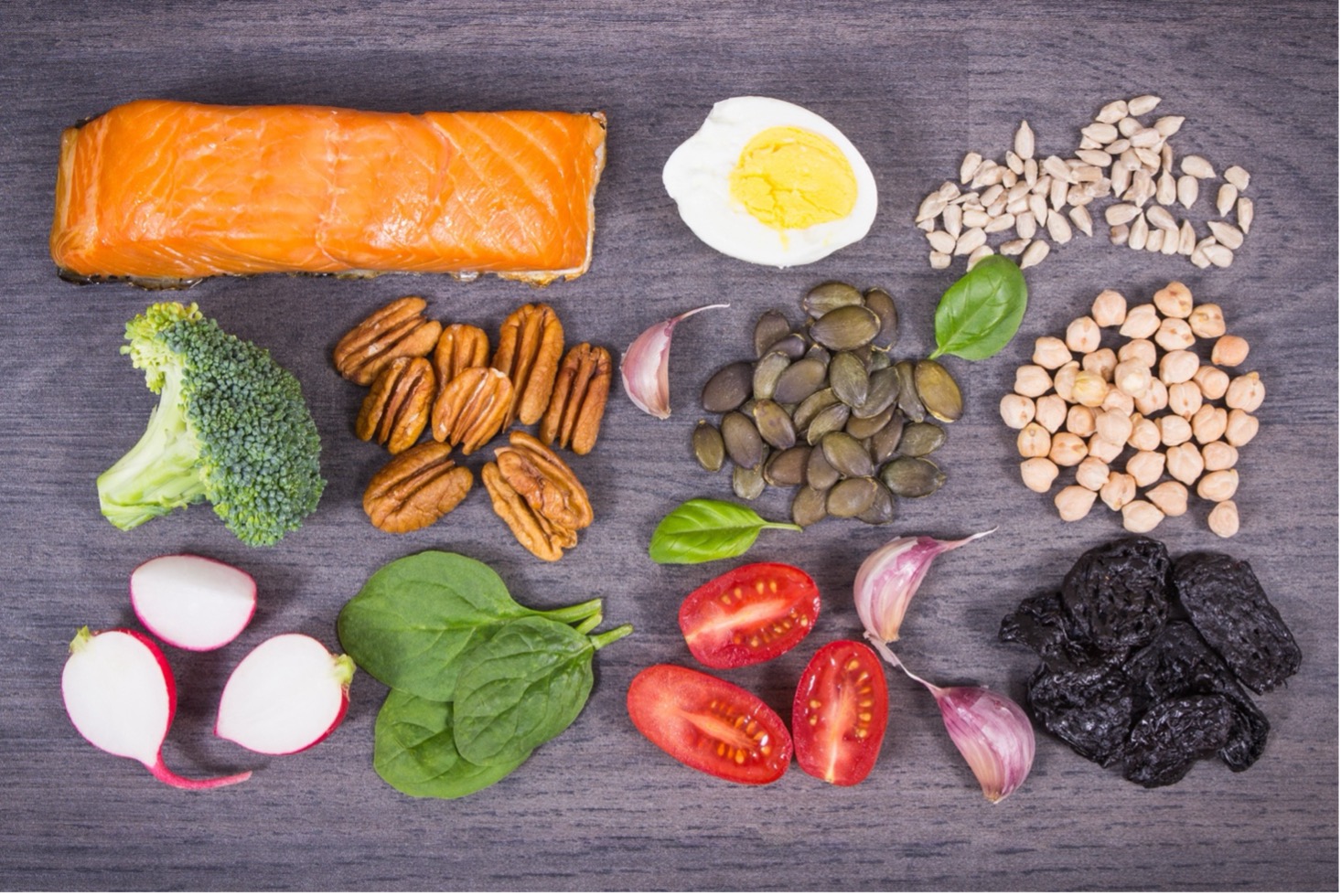
Here’s a list of foods for baby brain development during pregnancy you can add to your diet:
Fatty Fish and Seafood
Fatty fish is one of the best dietary sources of DHA. Low-mercury options such as salmon, sardines, anchovies, and trout also provide protein, iodine, vitamin B12, and other nutrients that support healthy growth2.
Include fish regularly as part of a balanced pregnancy diet, choosing lower-mercury options such as salmon and sardines. Because fish provides several brain-supporting nutrients in a single food, it can be a valuable part of a healthy pregnancy diet.
Eggs and Lean Proteins
Eggs are one of the best sources of choline. One egg provides about 147 mg of choline, with most of it found in the yolk, so it’s best not to leave it out. Along with choline, eggs also contain lutein and small amounts of DHA.
Lean proteins such as chicken, lean red meat, and fish provide additional choline, iron, and other nutrients that help support your baby’s growing brain.
Leafy Greens and Colourful Vegetables
Spinach, kale, broccoli, Brussels sprouts, and cauliflower are all nutritious choices during pregnancy. They supply folate along with fibre, vitamins, and antioxidants that help support your baby’s growth.
Adding a variety of colourful fruits and vegetables can provide even more antioxidants. These help protect developing cells from oxidative stress, which occurs when harmful molecules called free radicals build up faster than the body can manage them.
Nuts, Seeds, and Legumes
Beans, lentils, chickpeas, nuts, and seeds provide a mix of pregnancy nutrients in one meal. Depending on the food, they can contribute folate, iron, choline, or plant-based omega-3s. They’re also rich in fibre and are an excellent option if you follow a mostly plant-based diet.
Foods and Habits to Limit During Pregnancy
High-Mercury Fish to Avoid
Fish is good for you, but a few types have enough mercury to harm a developing brain. Methylmercury can damage the central nervous system, especially the developing foetal brain. According to KKH’s pregnancy nutrition advice, you should avoid these high-mercury fish during pregnancy8, including:
– Shark
– Swordfish
– King mackerel (known locally as “batang fish”)
– Tilefish (also called white snapper)
– Marlin
– Orange roughy
– Bigeye tuna
This doesn’t mean you should avoid fish, just choose the right ones. The same guidance suggests 2 servings a week of lower-mercury fish such as salmon, sardines, herring or halibut. Also, limit canned albacore (white) tuna to one serving a week.
Processed and Sugary Foods
An occasional treat is fine, but heavily processed foods and foods high in added sugar are generally lower in the nutrients needed during pregnancy. Eating them too often may also leave less room for nutrient-rich foods that provide folate, iron, choline, iodine and healthy fats. Rather than cutting these foods out completely, focus on a balanced diet with plenty of vegetables, fruits, whole grains, protein-rich foods and healthy fats.
Alcohol, Caffeine, and Other Cautions
Some foods and drinks are best limited or avoided during pregnancy. Alcohol should be avoided during pregnancy because it crosses the placenta, and no safe amount of alcohol during pregnancy has been established. Prenatal alcohol exposure can cause foetal alcohol spectrum disorders and other developmental problems.
Caffeine doesn’t need to be eliminated but consume it in moderation. KKH’s Dos and Don’ts in Pregnancy guide recommends limiting caffeine to less than 200 mg a day, although the amount of caffeine in coffee varies by type and serving size.9 As your pregnancy progresses, your body breaks down caffeine more slowly, allowing it to stay in your system longer.
The Bottom Line
Supporting your baby’s brain starts with consistent, healthy nutrition. Eating a balanced diet, taking your prenatal vitamin as recommended, and avoiding alcohol and high-mercury fish can help provide the nutrients your baby’s developing brain needs.
Healthy brain development doesn’t stop at birth. The foundation you build during pregnancy continues after delivery, including throughout your baby’s first 100 days of life, when feeding, sleep, bonding, and ongoing brain growth all play an important role in early development.
It’s also a good time to learn about birth-related decisions, such as whether cord blood banking is right for your family, since cord blood can only be collected once, immediately after birth.
FAQs
Can what I eat during pregnancy affect my baby’s IQ later in life?
Nutrition during pregnancy supports normal brain development, but no particular food or nutrient has been shown to determine a child’s IQ. Nutrients such as iodine, iron, choline, folate and DHA all have important roles in healthy development.
Is it too late to start eating brain-boosting foods in the third trimester?
Not at all. Your baby’s brain grows rapidly throughout pregnancy, especially during the third trimester when it needs large amounts of DHA. Improving your diet at any stage can still support healthy brain development.
Do I need to eat more if I’m pregnant with twins?
A twin pregnancy usually increases your nutritional needs, but it doesn’t simply mean eating twice as much. You’ll need more of the same key nutrients that support brain development. Since every pregnancy is different, ask your doctor or a registered dietitian for advice tailored to you.
Can I get enough brain-supporting nutrients on a vegetarian or vegan diet?
Yes, but it takes some planning. Plant-based diets may be lower in DHA, vitamin B12, iron, zinc, and iodine. Foods, fortified products, and supplements can help fill those gaps. Talk to your healthcare provider to make sure you’re getting everything your baby needs.
Will morning sickness or food aversions affect my baby’s brain development?
For most pregnancies, no. Morning sickness is common and usually doesn’t affect your baby’s development. If you’re struggling to eat, focus on the foods you can tolerate, stay hydrated, and keep taking your prenatal vitamin if possible. If you’re unable to keep food or fluids down, contact your doctor, as you may need treatment.